
On a small commercial building — a shop and offices, a clinic, a workshop — the individual trades are rarely the problem. Programmes slip because the plumber chased a wall the plasterer finished yesterday, or because the roof went on before the frame had cured enough to be loaded.
The principle: nothing gets built twice
Every sequencing decision comes back to one question — will a later trade have to break into this work? If the answer is yes, the later trade goes first.
That sounds obvious and it is routinely ignored, because the trades that arrive early are usually the ones the client can see progress from, and the ones that should go first are buried services nobody photographs.
A working sequence
- Set out and clear. Gridlines pegged and referenced off site, topsoil stripped, temporary drainage cut so the site does not flood in the first storm.
- Substructure. Excavation, blinding, pads and ground beams, with all below-slab drainage and any service ducts laid, tested and recorded before the ground floor slab is poured. Breaking a finished slab for a forgotten soil pipe is the classic, expensive mistake.
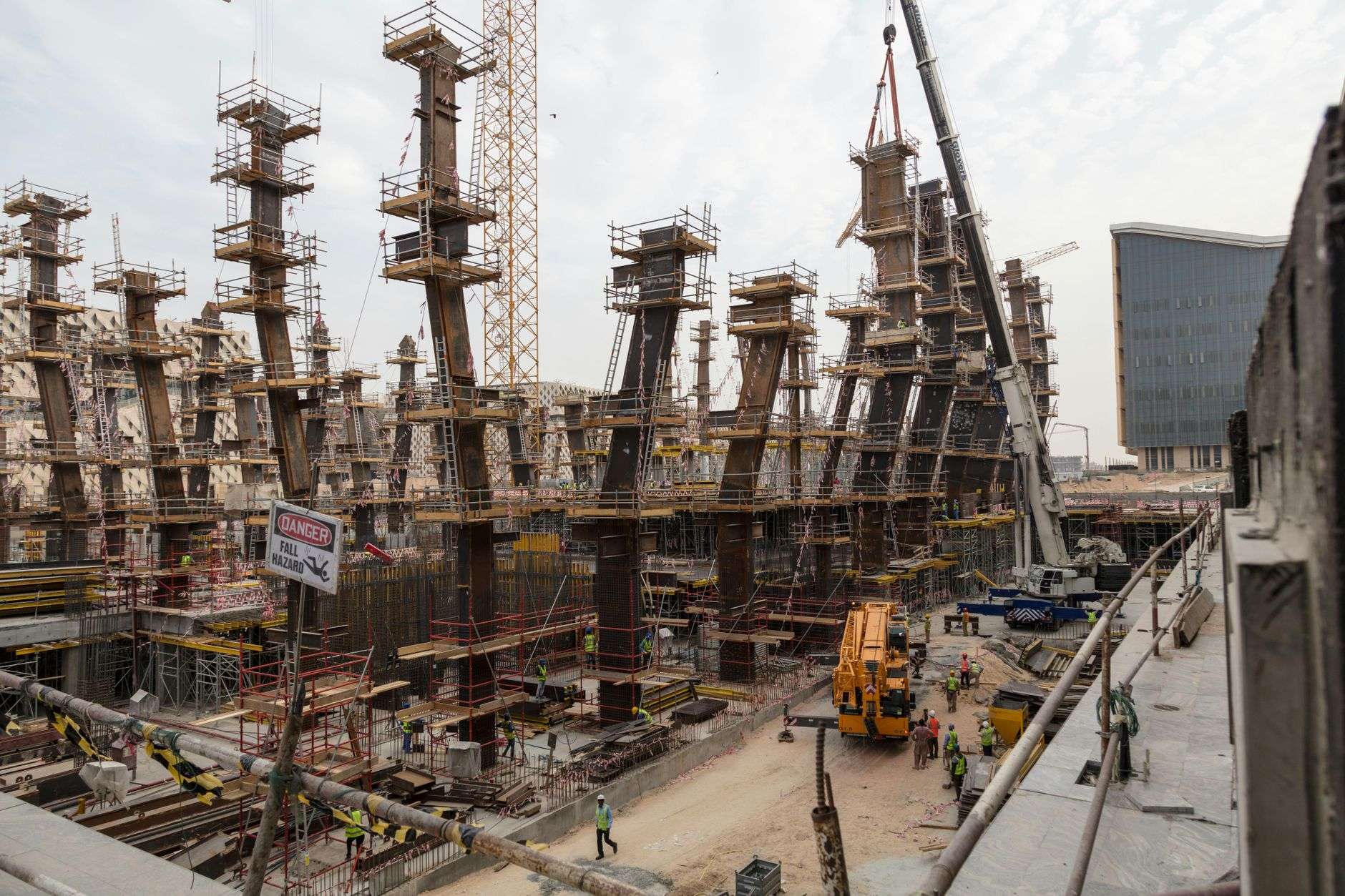
- Frame. Columns and beams by lift, with proper curing time before the next lift loads them. Programmes that assume a column can carry a beam pour at three days are the reason props stay in place longer than anyone planned.
- Roof. Getting the building watertight early protects everything that follows and lets internal trades work through rain. On single-storey buildings this is the highest-value early milestone there is.
- Blockwork and openings. Walls, lintels, and frames set in position.
- First fix services. Electrical conduit, plumbing runs, data. Chased into blockwork before plaster, never after.
- Plaster and screed. Only once every chase is closed and every service has been pressure-tested or continuity-checked.
- Second fix and finishes. Fittings, doors, tiling, painting — and painting genuinely last, after the dusty trades have left.
- External works. Aprons, paving, drainage connections, landscaping, once heavy plant no longer needs to cross them.
The overlaps that are worth it
Not everything is strictly sequential. On buildings with more than one bay we work the frame in one bay while blockwork proceeds in a completed one, which shortens the programme without creating conflict. Joinery, windows and any imported items are ordered at frame stage, because the lead time is usually longer than the remaining programme.
The overlaps that are not
Two we refuse: plastering before services are complete and tested, and any finishing trade working under an area where structural work is still going on overhead. The first costs money; the second costs someone an injury.
Where the programme actually lives
Not in a bar chart that was printed once. On our sites it is reviewed weekly against three things: what was completed, what materials are on site for the next two weeks, and which approvals or deliveries are on the critical path. Almost every serious delay we have seen was visible three weeks earlier as a late order or an unsigned approval, and could have been dealt with then.
OK Estate Construction and Supply Limited plans and delivers commercial buildings across Uganda and South Sudan. Talk to our team about your programme.